
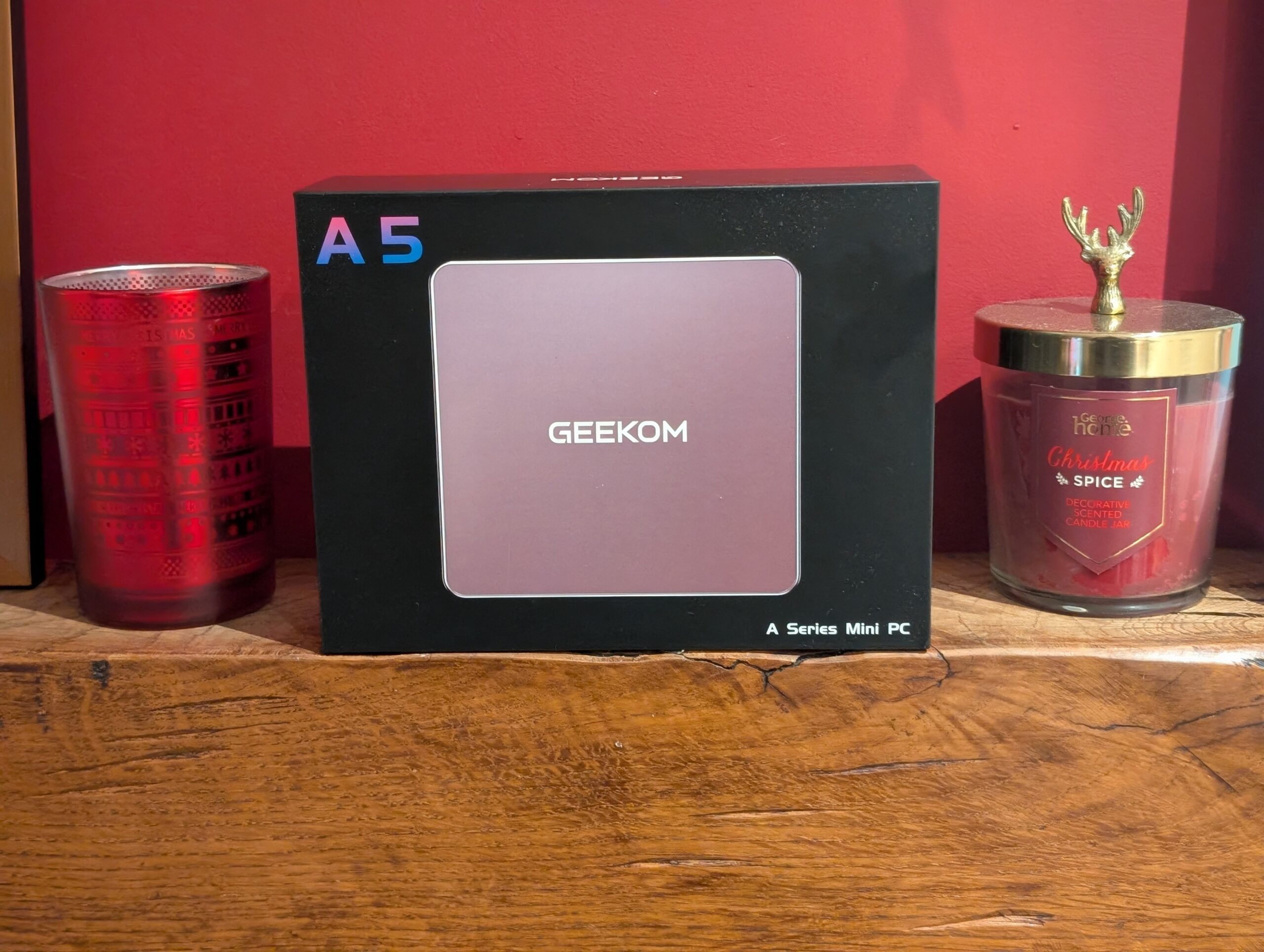
Geekom A5 2025 Edition Review – AMD Ryzen 7430U Mini PC
The Geekom A5 2025 Edition presents an interesting proposition in the current mini PC market. Rather than a straightforward upgrade from the 2023 model, this refresh represents a sideways move that prioritises power efficiency and affordability over raw performance. Whether that trade-off makes sense depends entirely on your workload and budget expectations.
Discount
Geekom have kindly provided a discount code:
- Discount code: MDTGKA56
- Discount: 6% OFF
- Valid on: UK Amazon & the UK GEEKOM official website
Understanding the 2025 Refresh
The headline change is the processor. Where the 2023 model used the AMD Ryzen 7 5800H with eight cores and sixteen threads, the 2025 edition runs an AMD Ryzen 5 7430U with six cores and twelve threads. On paper, this looks like a downgrade, and in multi-threaded workloads, that assessment holds true. The newer chip has a lower TDP of 15-25W compared to the 35W of its predecessor, which translates to meaningfully reduced power consumption and quieter operation.
I found myself initially sceptical about this approach. However, context matters enormously here. The PC component market has been in turmoil, with DDR4 and DDR5 RAM prices increasing substantially over the past year. A 32GB DDR4 kit that cost around £55 in mid-2025 was selling for over £196 at the time of writing. Geekom has responded by shipping the 2025 edition with 16GB rather than 32GB, and by using a more efficient processor to keep the overall package affordable. The result is a mini PC that can be purchased for under £300 during regular sales, which positions it in an appealing sweet spot between budget Intel N-series machines and more powerful alternatives.
Design and Build Quality
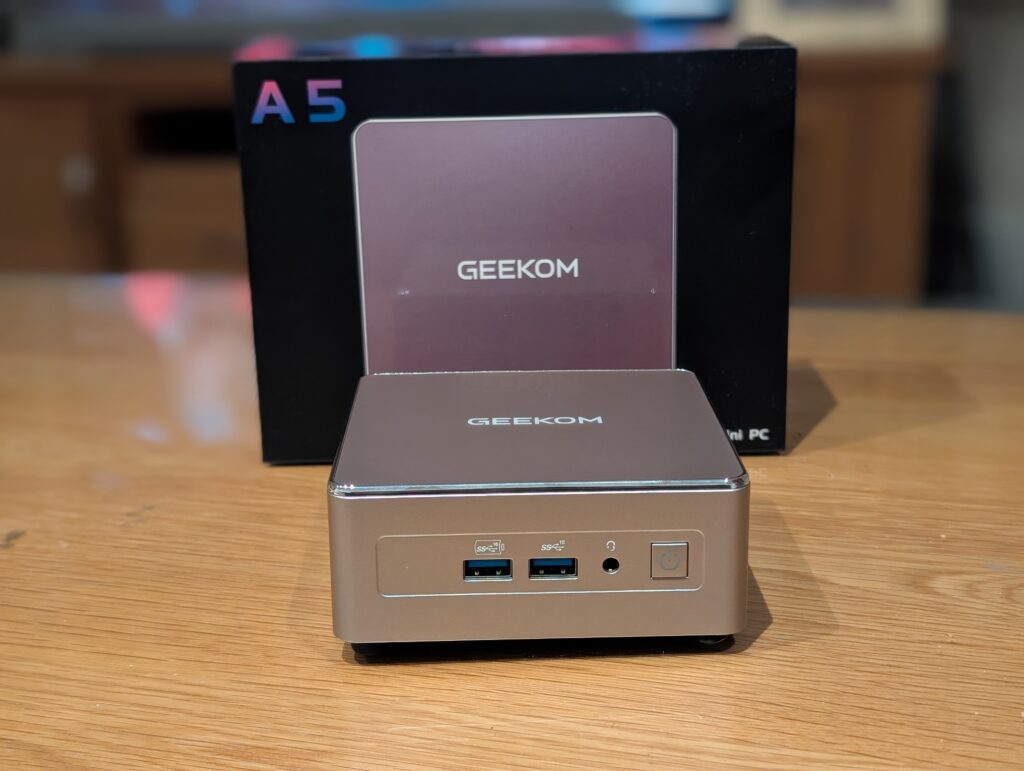
Physically, the A5 2025 Edition is identical to previous Geekom mini PCs. The chassis measures 117 x 112 x 49.2mm and weighs approximately 652g. Geekom uses a champagne-gold finish that sets it apart from the typical black boxes flooding the market. The construction combines a PC and ABS composite top with a metal middle frame and bottom cover. While the exterior appears metallic, it is mostly plastic, but the build quality feels premium for this price point.
The cooling system proves particularly effective on this lower-TDP chip. Geekom calls it IceBlast 2.0, and during my testing, even after several hours of sustained use, the fan remained essentially inaudible during normal workloads. I measured noise levels at around 29dBA at idle and just 33dBA under load, making it one of the quietest mini PCs I have tested in this price bracket. For office environments or home theatre setups where noise is a concern, this is a genuine advantage over more powerful alternatives.
Connectivity and Ports
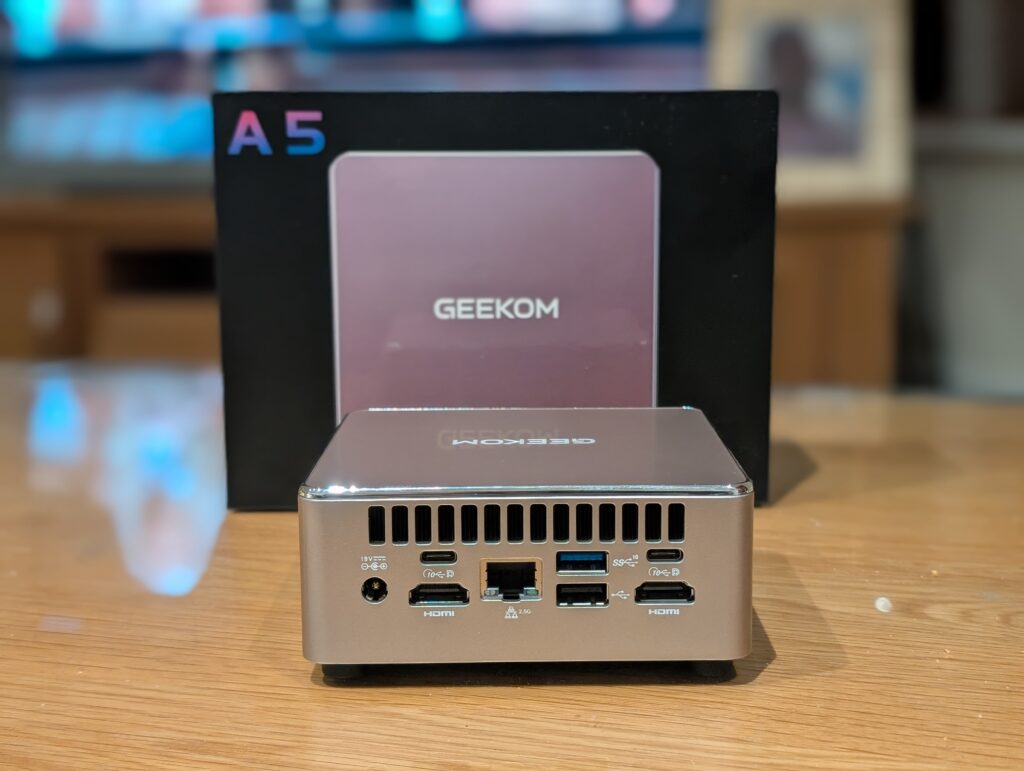
Port selection remains generous. The front panel provides two USB 3.2 Gen 2 Type-A ports and a 3.5mm headphone jack. The rear offers two HDMI 2.0b ports, two USB 3.2 Gen 2 Type-C ports with DisplayPort output capability, a third USB 3.2 Gen 2 Type-A port, a USB 2.0 Type-A port, 2.5GbE Ethernet, and the barrel jack for power. An SD card reader sits on the side panel, which is sensible for accessibility, particularly if you mount the unit behind a monitor using the included VESA bracket.
The 2.5GbE LAN port deserves particular mention. With CityFibre rolling out 2.5Gbps FTTP connections across the UK, multi-gigabit Ethernet is becoming increasingly relevant. I confirmed throughput of approximately 2535Mbps between the A5 and my NAS running Unraid, which matches the performance I achieved with more expensive machines.
Wireless connectivity uses a Realtek RTL8852BE card supporting WiFi 6 and Bluetooth 5.2. The RTL8852BE does not have the greatest reputation for reliability, but it worked well during my testing with speeds reaching approximately 898Mbps in optimal conditions. Notably, the WiFi module is located under the NVMe drive and can be upgraded to WiFi 7 using either the Qualcomm NCM865 or MediaTek MT7927 if faster wireless becomes a priority.
Upgradeability
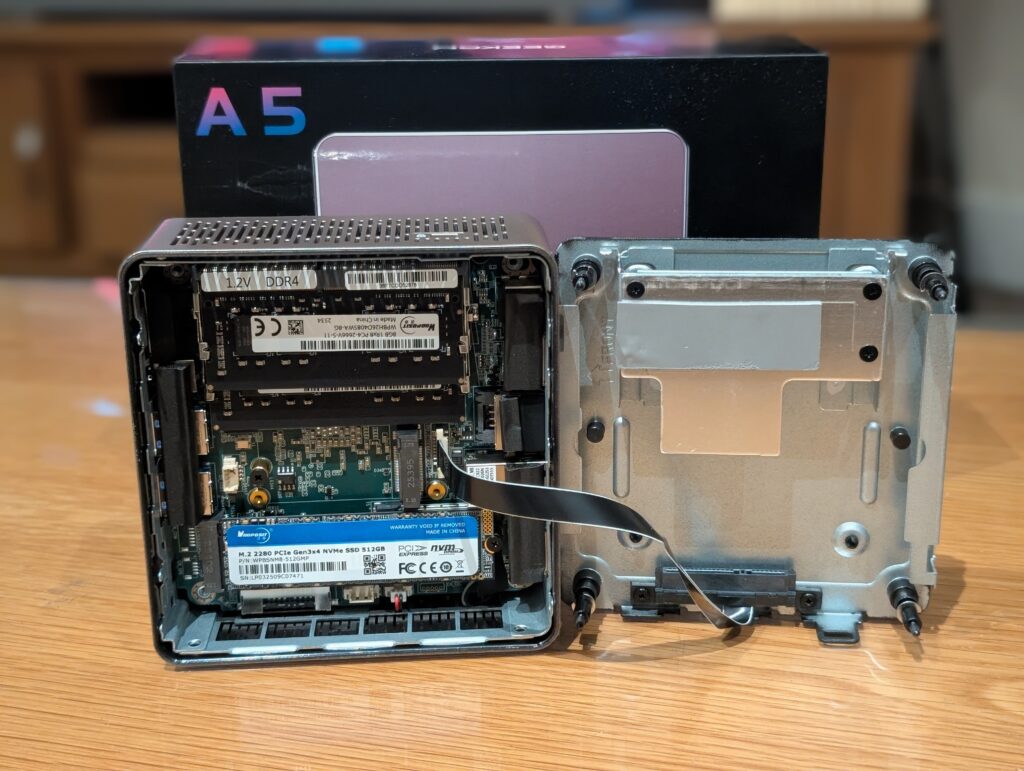
Getting inside the chassis is straightforward. Four captive Phillips screws on the base release the underside, providing access to two DDR4 SO-DIMM slots supporting up to 64GB of memory, a primary M.2 2280 slot for the NVMe SSD, and a secondary M.2 2242 slot for additional SATA storage. The 2242 slot limits expansion options to shorter drives, which are less common and typically offer lower capacities than standard 2280 units. A tray for a 2.5-inch 7mm SATA HDD or SSD connects via ribbon cable, though with SATA SSDs falling out of fashion, I would have preferred another 2280 M.2 slot.
The BIOS remains quite limited. There is no overclocking capability, no option to change RAM profiles, and no Wake-on-LAN or scheduled power-on functionality. A performance mode toggle can boost processing power by approximately 7-13 per cent depending on the workload, at the expense of slightly higher power consumption and fan noise. On the positive side, I found the system Linux-friendly, with Ubuntu 24.10 and Fedora 42 both running without issues during testing.
Performance Testing
The AMD Ryzen 5 7430U belongs to the Barcelo-R 7030 series and remains based on Zen 3 architecture. It features 6MB of L3 cache and a configurable 15-25W TDP. While this is technically a newer processor than the Ryzen 7 5800H in the 2023 model, it has fewer cores and a slightly lower boost clock of 4.3GHz compared to 4.4GHz.
In 3DMark Time Spy, the 2025 edition scored 1193 points compared to 1604 for the 2023 model, reflecting the impact of fewer GPU compute units and reduced core count. PCMark 10 returned an overall score of 5900 versus 6100 for the previous model. Geekbench 6 showed a single-core score of 1926 and multi-core score of 6959, compared to 1976 and 9132 respectively for the 2023 edition.
These numbers position the Geekom A5 2025 at roughly double the performance of budget Intel N100 systems while remaining significantly more affordable than premium mini PCs. For gaming, expectations should be tempered. Valorant at 1080p low settings achieved approximately 150 FPS, Counter-Strike 2 delivered around 79 FPS, and League of Legends maintained 157 FPS at very high settings. These results are acceptable for esports titles but unsuitable for modern AAA games.
Power Consumption
This is where the 2025 model demonstrates its efficiency advantage. Idle power measured just 6W, placing it among the most efficient mini PCs I have tested. Normal usage sits at around 20-30W depending on workload, while stress testing peaked at 43-47W. Over a typical week with 14.5 hours of daily use, the A5 2025 consumed approximately 0.35kWh per day compared to 0.49kWh for the 2023 model, representing roughly 29 per cent less electricity consumption. For anyone running a mini PC as an always-on server or home theatre machine, this efficiency translates to meaningful savings over time.
Pricing and Alternatives
The Geekom A5 7430U model with 16GB RAM and 512GB NVMe storage has an RRP of £449 but was available for £349 on the Geekom website at the time of writing, with Boxing Day discounts taking it down to £296.65. Geekom also offers a model with the AMD Ryzen 7 5825U featuring eight cores at £419 before discounts, and the A5 Pro with 7430U and Windows 11 Pro at £419.
The Geekom A6 with AMD Ryzen 7 6800H and 16GB DDR5 was available for £413, making it an interesting alternative for those wanting more performance. Tom’s Guide testing showed the A6 scoring 10547 in Geekbench multi-core compared to 6492 for the A5 2025, which represents a substantial difference for demanding workloads.
Verdict
The Geekom A5 2025 Edition is admittedly an odd product to evaluate. It offers objectively lower specifications than its predecessor at a similar price point. Under normal circumstances, this would invite heavy criticism, but the current state of the component market makes this approach understandable if not exactly exciting.
The strengths are clear: exceptional quietness, excellent power efficiency, comprehensive connectivity with quad-monitor support, premium build quality, and a three-year warranty. The weaknesses are equally apparent: Zen 3 architecture is showing its age, performance falls behind the 2023 model, the secondary M.2 slot is limited to 2242 format, and there is no USB4 or Thunderbolt connectivity.
At under £300, the A5 2025 represents a sensible purchase for home office professionals, media playback, light productivity, and low-power server duties. It comfortably outperforms Intel N-series budget systems while costing far less to run than more powerful alternatives. If you need maximum CPU performance for rendering, modern gaming, or professional video editing, look elsewhere. But for the majority of everyday computing tasks, this quiet, efficient, and well-connected mini PC delivers solid value in a challenging market.