iQOO 12 Qualcomm Snapdragon 8 Gen 3 Benchmarks vs Snapdragon 8 Gen 2 vs Google Tensor G3 Compared
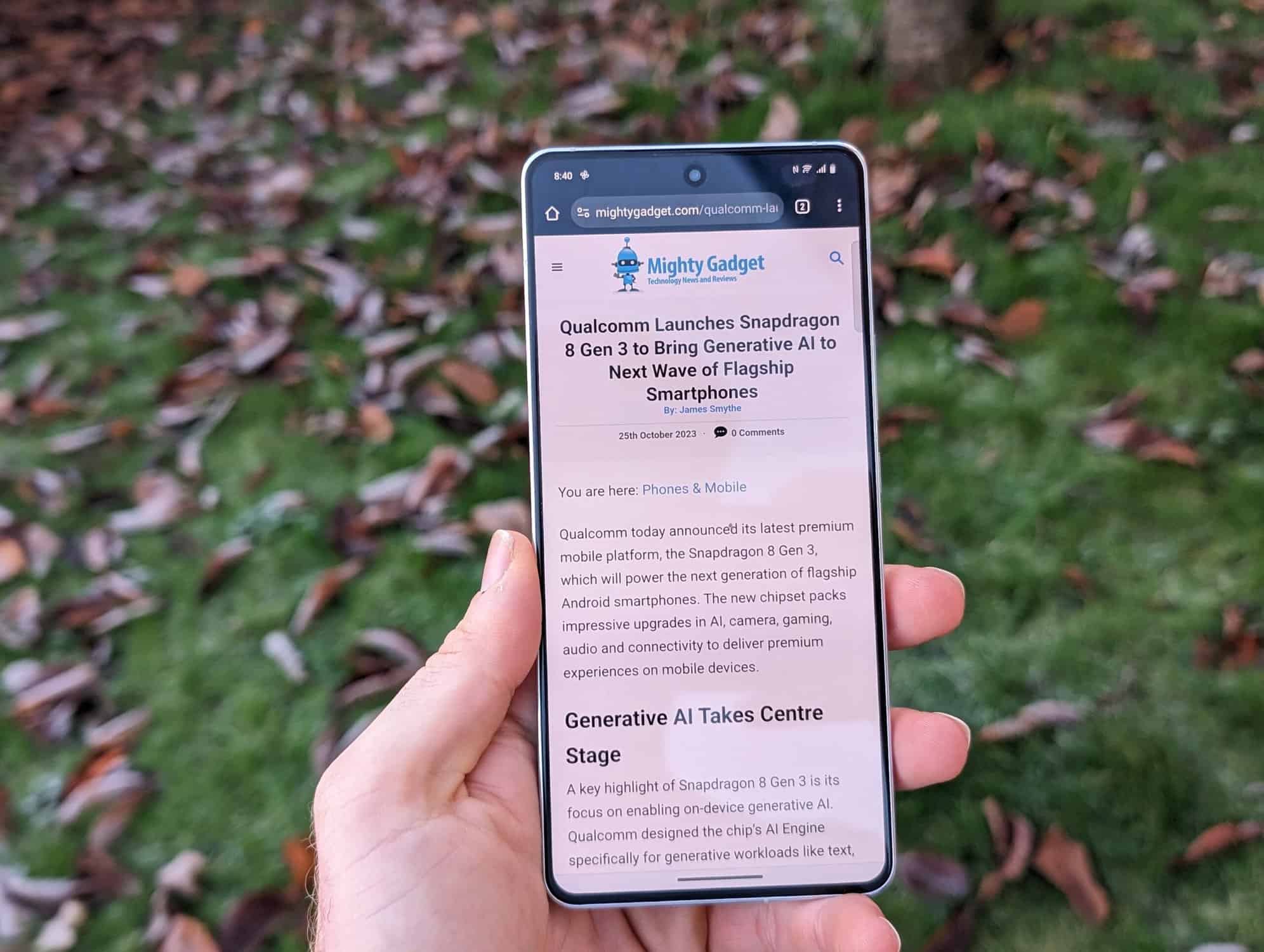
The Qualcomm Snapdragon 8 Gen 3 was officially announced at the end of October, with the Xiaomi 14 series being the first phone to feature this latest flagship chipset.
This was quickly followed by the iQOO 12, which was officially launched on the 14th of November, but it is now receiving a global launch.
As usual, when I receive a phone with a new chipset, I have run all the common benchmarks to gauge how the new chipset performs against previous or similar models.
Sadly, I don’t have the Vivo X100, which features the latest MediaTek Dimensity 9300, which is the chipset that will be the greatest rival vs the Snapdragon 8 Gen 3.
As always, benchmarks are not representative of real-world performance and are prone to being artificially inflated, but it is a simple way to see generational improvements.
Qualcomm Snapdragon 8 Gen 3 vs Snapdragon 8 Gen 2 Specification
[table id=618 /]
The Qualcomm Snapdragon 8 Gen 3 is a significant upgrade from the SD8 Gen2 with a shift in CPU core design. Qualcomm continues to use a single Prime core, which is now based on the ARM Cortex X4.
The main change comes with the other cores. The normal design used to have 4 efficiency cores, similar to the Google Tensor G3, but Qualcomm dropped that down to three with the Snapdragon 8 Gen 2 and then two with the Snapdragon 8 Gen 3.
This then leaves five ARM Cortex A720-based performance cores, with three clocked at 3.2GHz and two at 3.0GHz.
It is worth noting that all the cores are clocked higher than the previous generation and it looks like Qualcomm has really pushed the boat out with trying to maximise performance.
The Google Tensor G3, which was only recently launched, looks quite poor in comparison.
Antutu V10 Benchmark
[table id=549 /]
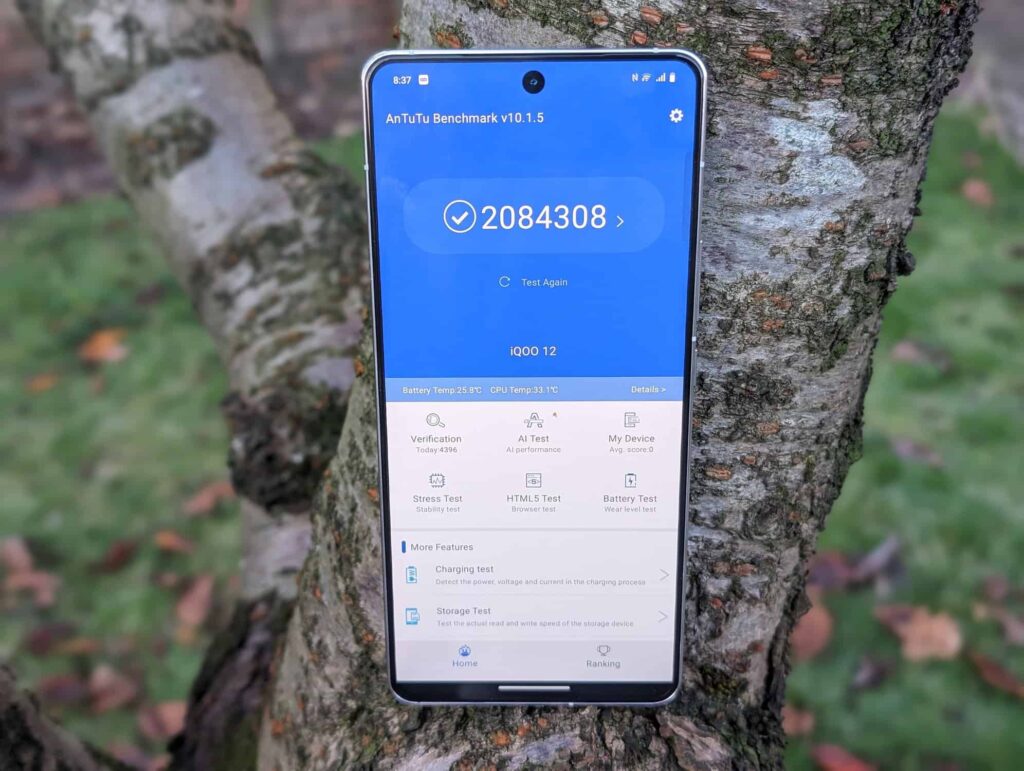
The iQOO 12 with the Qualcomm Snapdragon 8 Gen 3 gets off to a good start with a massive Antutu score that’s 52% higher than what I achieved on the Honor Magic5 Pro with the Snapdragon 8 Gen 2 and 82% higher than the Pixel 8 Pro.
As for the individual scores in comparison to the Snapdragon 8 Gen 2
- CPU score improved by 49.4%
- GPU score improved by 55.4%
- Memory score improved by 54%
- UX score improved by 46.8%
Geekbench 6 Benchmark
[table id=593 /]
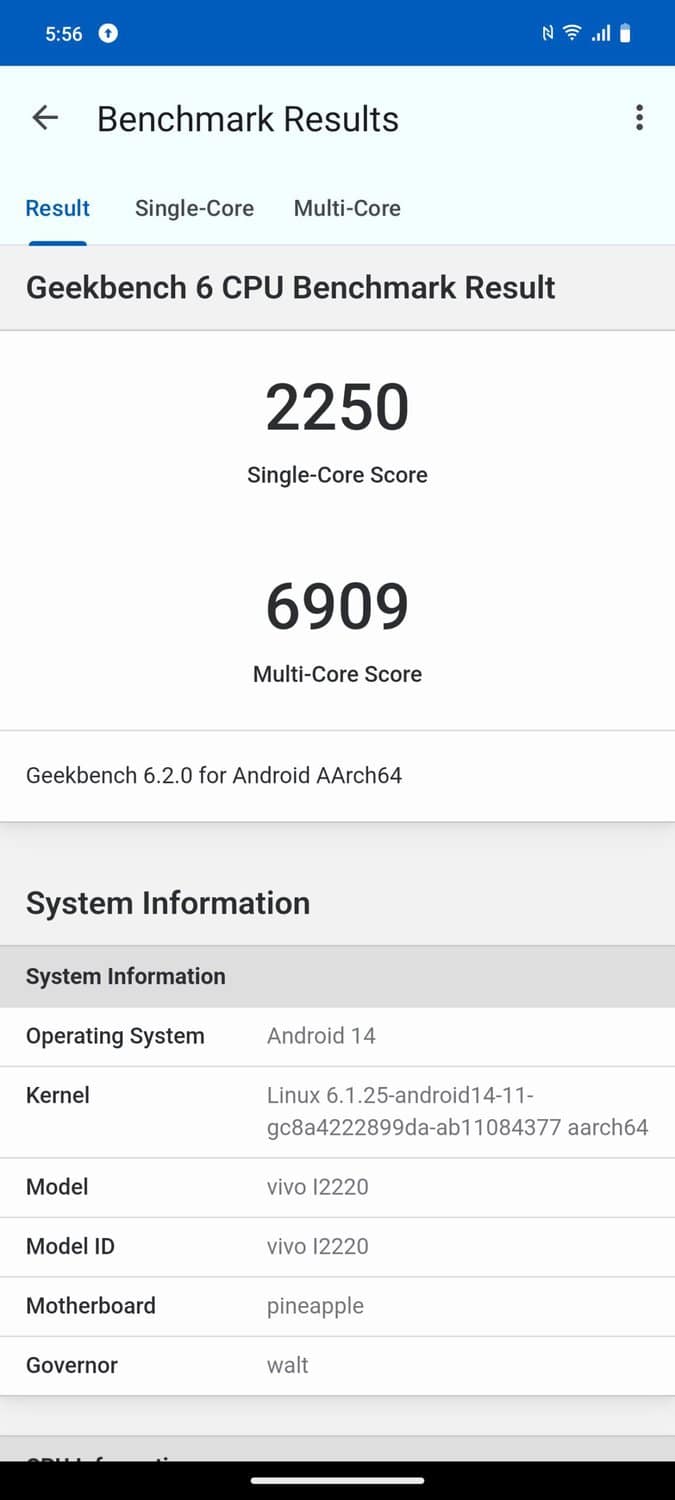
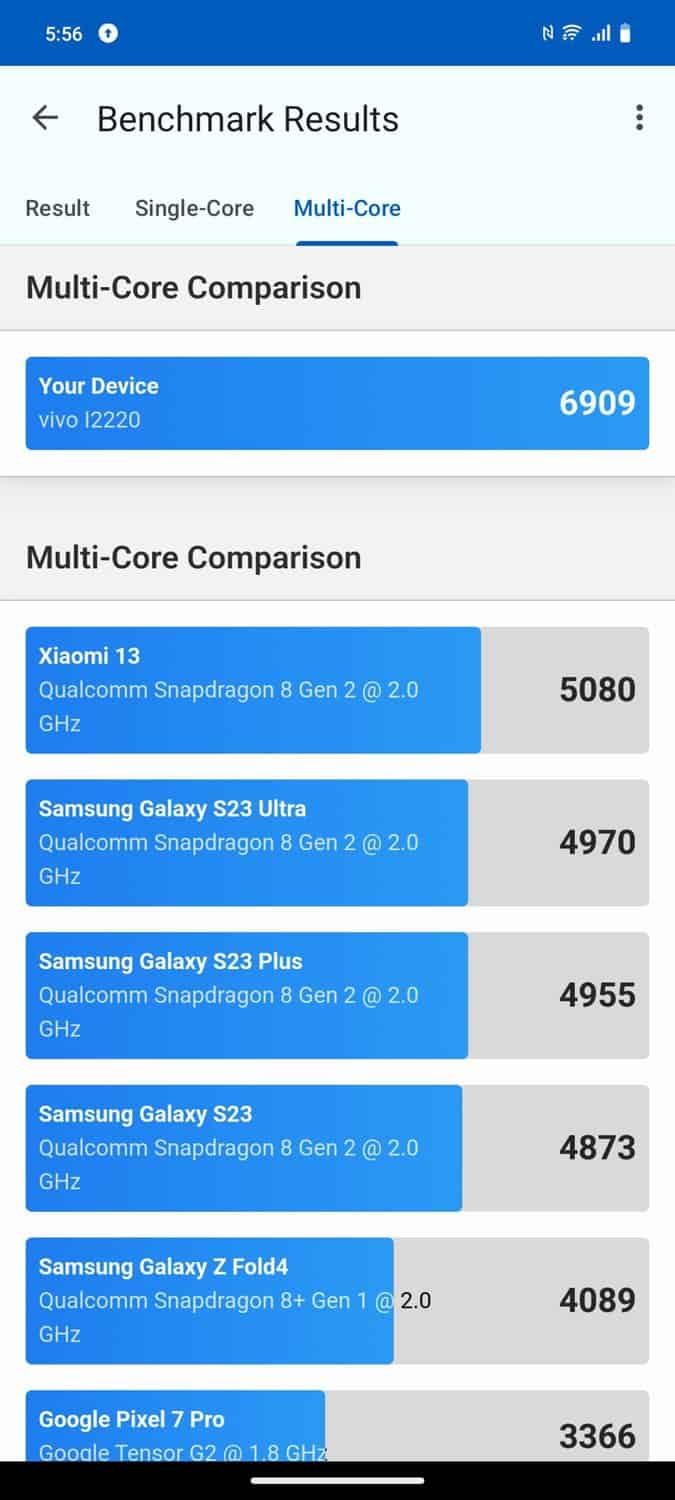
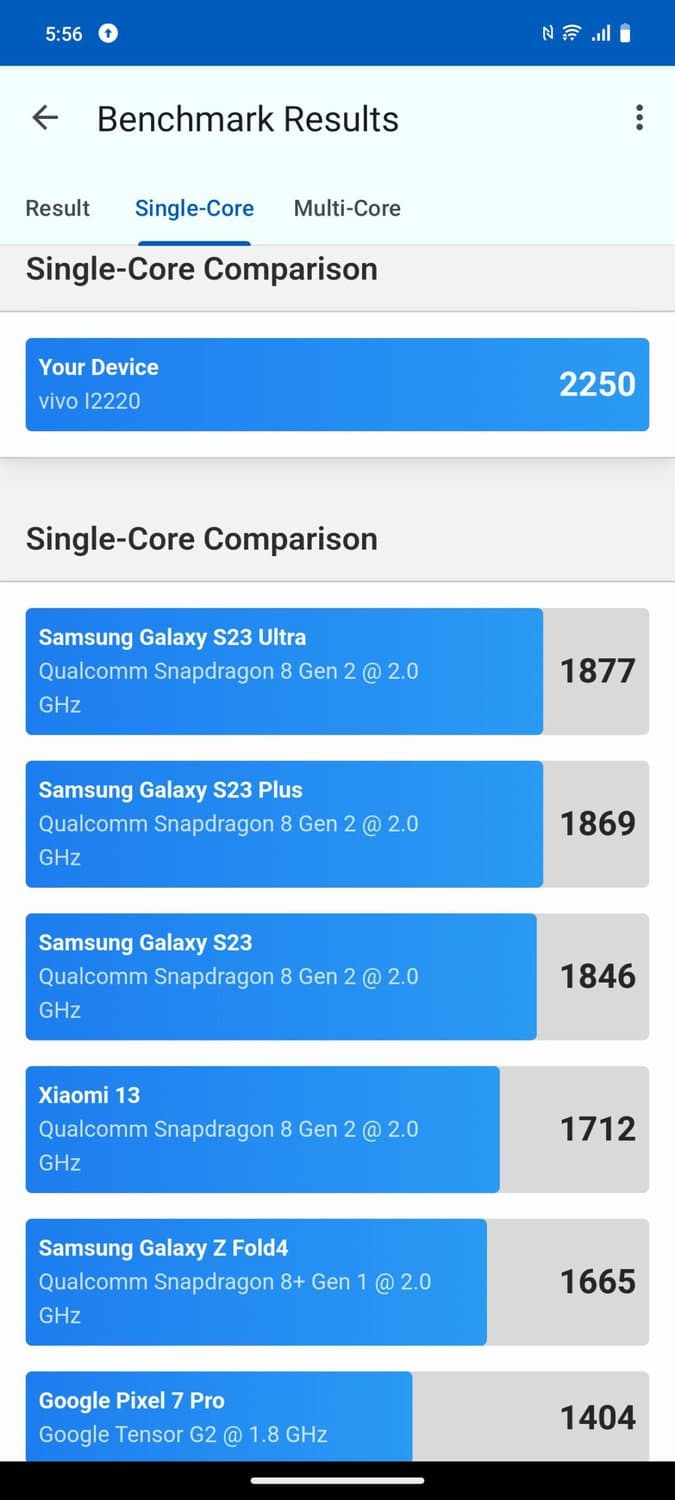
The results continue to be impressive with Geekbench 6 with a 15.4% improvement for the single-core results and 32% with the multicore.
The Tensor G3 lags behind with the Qualcomm achieving results that are 27.6% and 56.7% higher.
3DMark Wildlife Stress Testing / Thermal Throttling Benchmark
Early Tests
[table id=373 /]
Things get more complicated with 3DMark Wildlife stress testing.
I wrote this section shortly after receiving the phone, and subsequent tests showed different results. I have had two firmware updates since the test and retesting the phone showed significantly improved results. I am leaving this section here as it is a good example of how benchmarks can be unreliable.
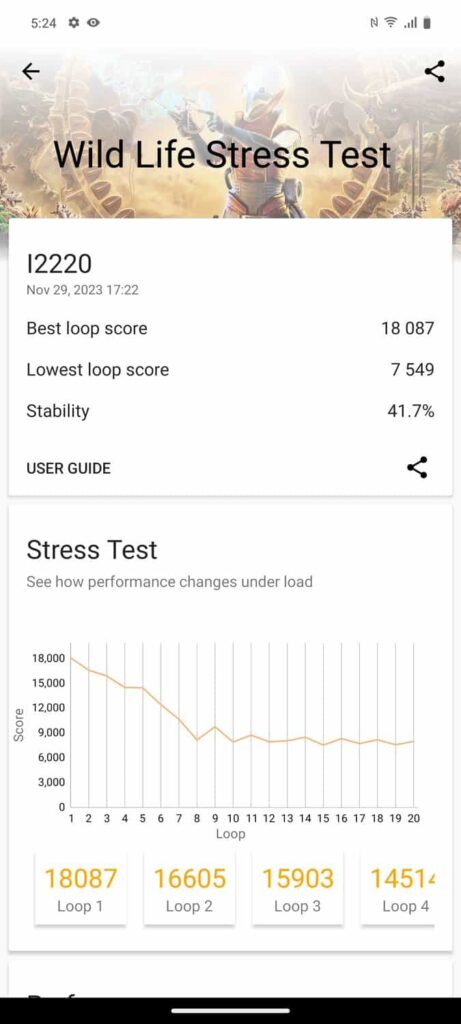
The Qualcomm Snapdragon 8 Gen 3 scores an incredibly high score of 18087, which is 42% higher than the SD8 Gen2 and 77.5% higher than the Snapdragon 8 Gen 1. Compared to the Tensor G3, Qualcomm embarrasses it with a result that’s 114% higher.
Sadly, the performance degrades massively, with a stability score of just 41.7%, which is the worst I have ever seen. This means that the low score ends up being 11.9% lower than the Snapdragon 8 Gen 2.
Looking at the loop graph makes things look worse as the results drop off quickly from the first loop, and by loop 8 it looks like it is achieving half of the peak result.
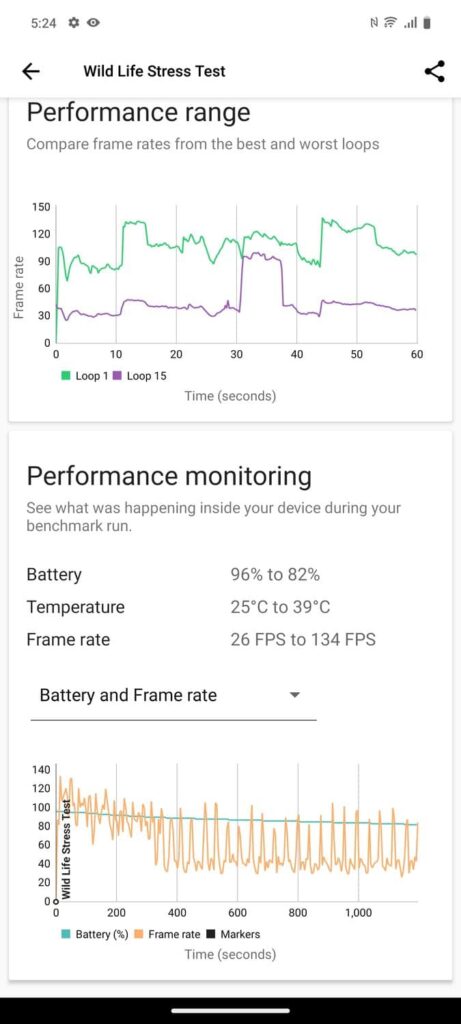
What is confusing is that the temperature peaked at 39°, which isn’t particularly high, many phones will push up to 44°.
The battery drop might be an indication of why the performance was throttled with a 14%pt drop, which represents approximately 700mAh. In comparison, the Honor Magic5 Pro dropped just 8%pt, which is roughly 408mAh.
With this being a brand-new phone and one of the first with the Qualcomm Snapdragon 8 Gen 3, it is quite possible that other phones with this chipset will be able to achieve a more balanced result, and it is also possible that this phone will improve over time with some firmware updates.
3DMark Wildlife Stress Testing Retesting
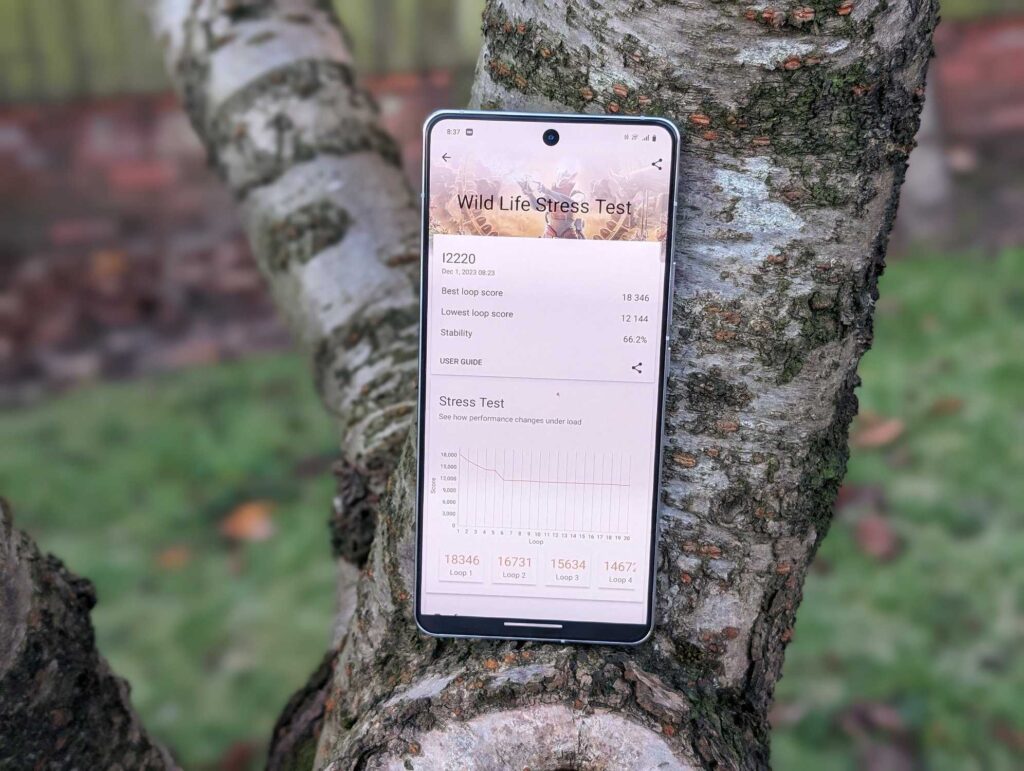
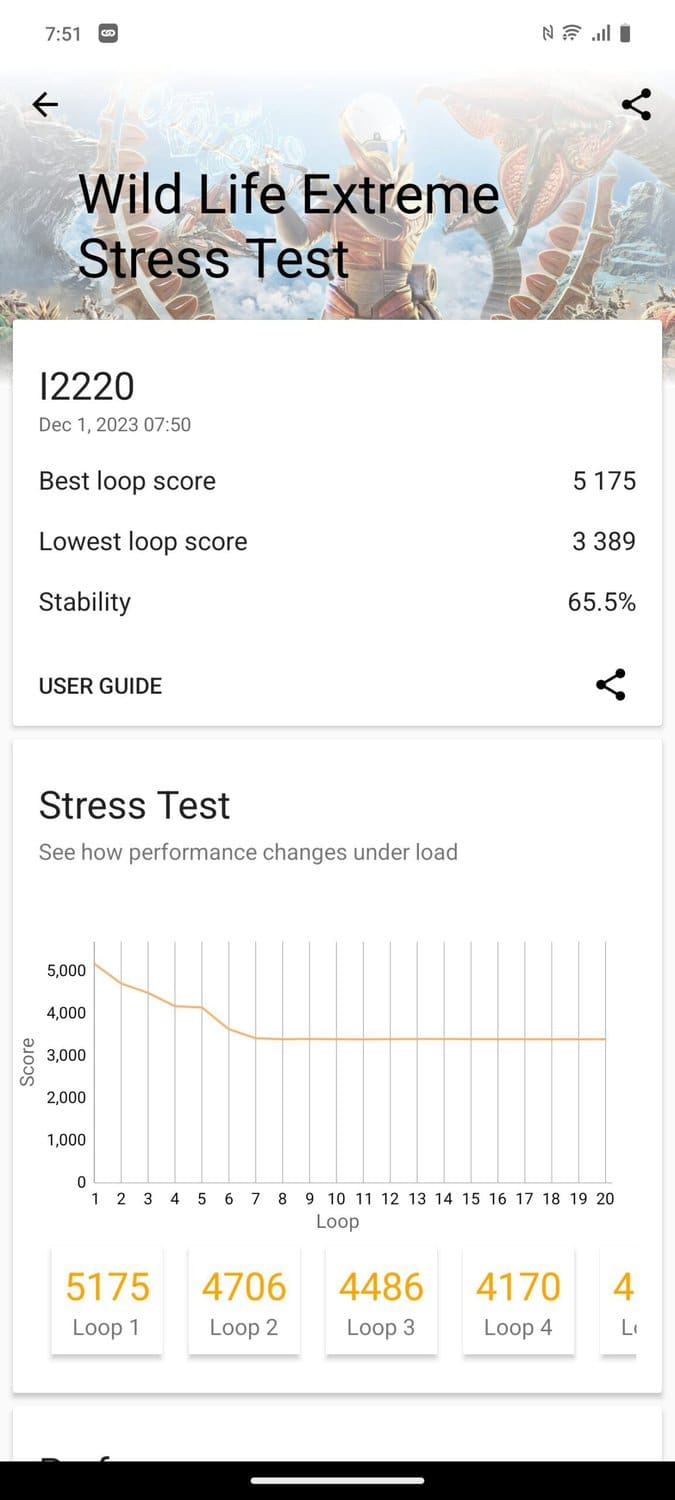
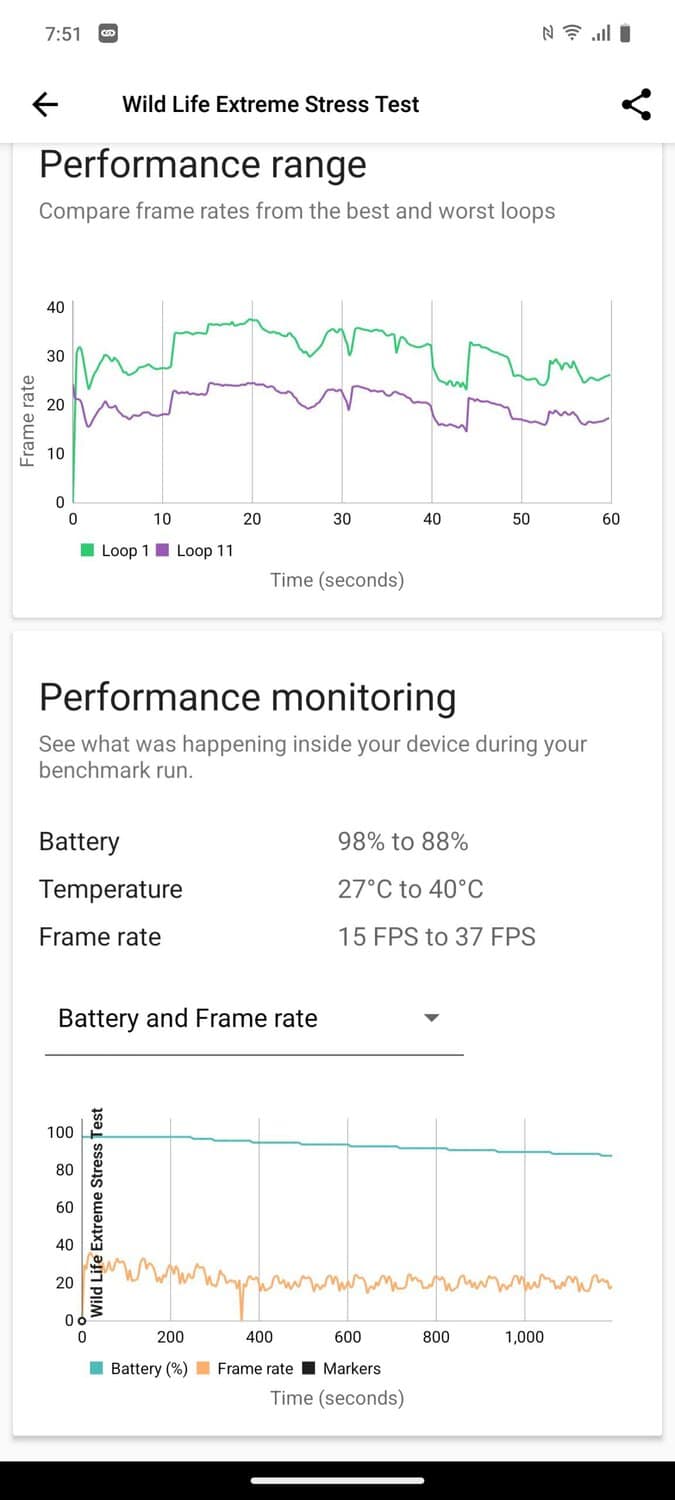
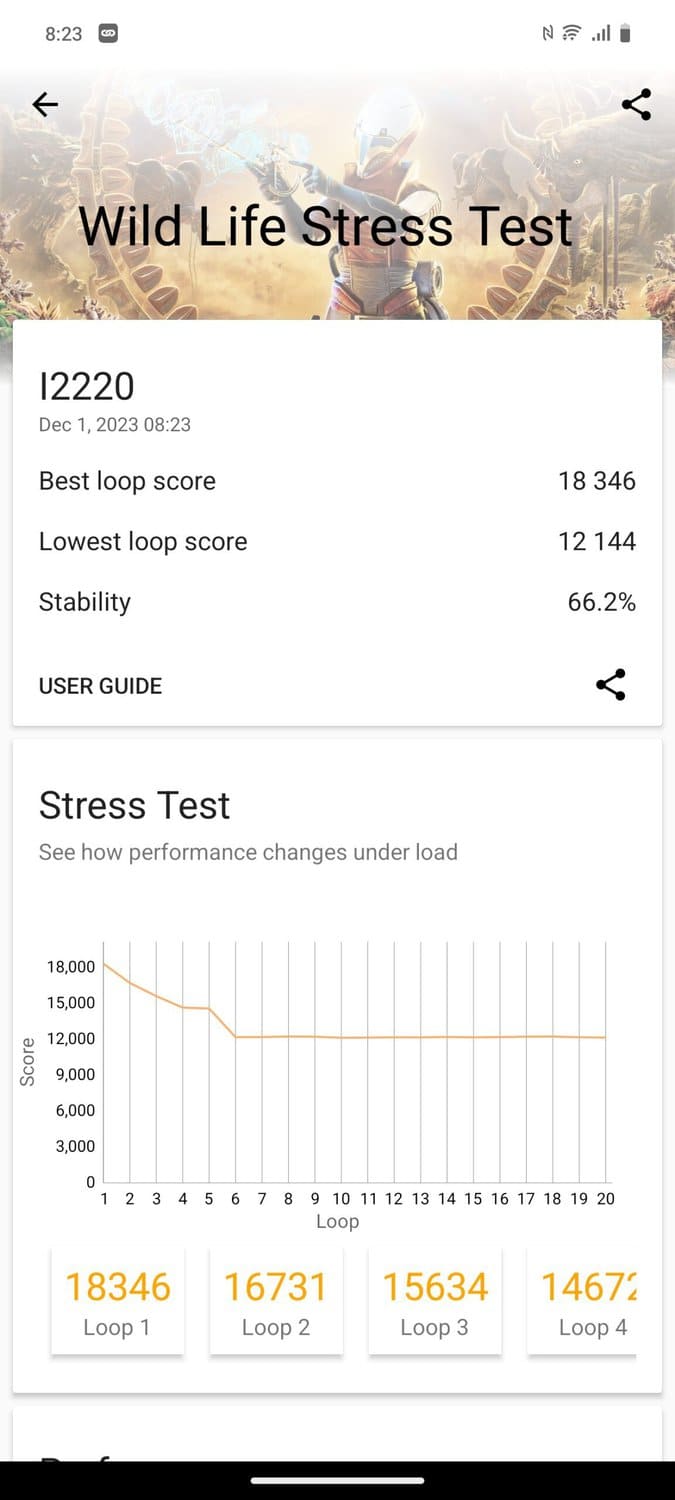
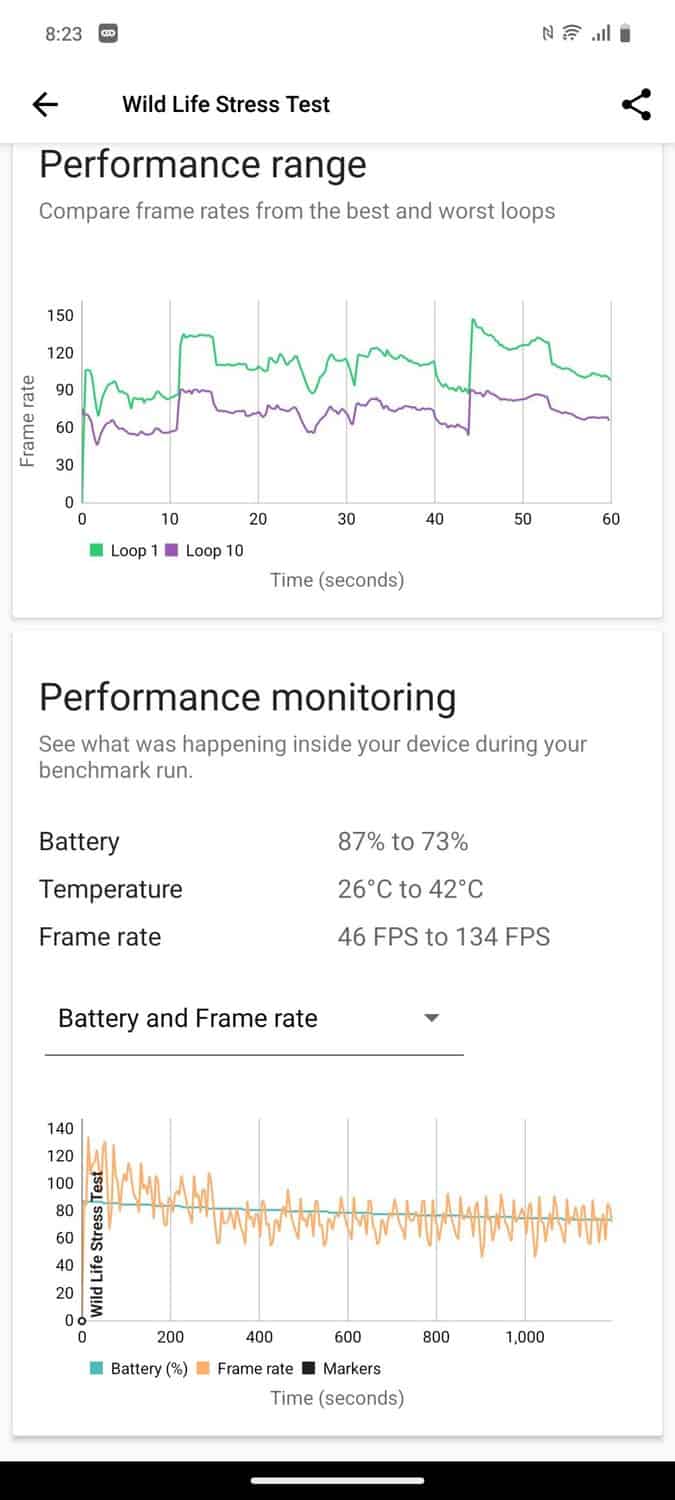
Thankfully, I retested the phone closer to the launch date and received much more positive results. This time, I used both the Wild Life Extreme stress test and the normal stress test.
With the normal test, the phone continued to score an incredibly high score of over 18K.
Thankfully, the stability vastly improved, with a stability score of 65.5% for the extreme test and 66.2% for the normal test.
This means the low score only dropped to 12144 which places it 42% higher than the low score of the Snapdragon 8 Gen 2.
The temperature increased to 42° which is about normal for most phones, and the battery dropped 14%pt again, which represents roughly 700mAh again. So the battery drain is quite a bit higher than the previous generation, but not surprising considering the massive performance increase.
PC Mark Performance and Work 3.0 Battery Benchmark
[table id=619 /]I find the PC Mark test pointless for chipset comparisons as the result varies widely between phones. It seems that some brands will maintain a high performance throughout, whereas other brands massively reduce the CPU frequencies for certain tasks.
Even the battery results are questionable. I can confidently say that the Honor Magic5 Pro is significantly better for battery life in comparison to the Pixel 8 Pro. I’d guess that I get at least 50% more use from one charge with the Honor.
In this case, there have been negligible improvements in the performance score for three generations of the flagship Qualcomm Snapdragon 8 chipset, but a significant improvement in battery life. The Honor Magic4 Pro only had a 4600 mAh battery, but the Honor Magic5 Pro has a 5100 mAh battery, while the iQOO has 500 mAh. The iQOO also has a fractionally smaller a lower resolution display though a higher refresh rate.
Even though I find these results unreliable, the endurance increases are logical due to the efficiency improvements of the chipset.
AI Benchmarks
With every company obsessed with AI and chipset manufacturers placing increased focus on AI, I started to add AI benchmarks with the Pixel 8 Pro.
AI benchmarks can vary wildly due to the AI libraries that get used. The Google Tensor G3, uses the Android Neural Networks API (NNAPI) that is built into Android.
Qualcomm chipsets have their own neural network library, and the problem here is that a developer needs to apply to Qualcomm to be allowed to use it. This ends up meaning the Snapdragon 8 Gen 2 can perform significantly better than the Tensor G3 if the application has access to those libraries.
AI Benchmark
- iQOO 12 with Qualcomm Snapdragon 8 Gen 3 using the default Qualcomm libraries: 3168
- Honor Magic 5 Pro using Qualcomm Libraries: 1870
- Pixel 8 Pro: 718
- Pixel 6: 337
- Honor Magic 5 Pro using NNAPI: 135
Qualcomm are not messing around when it comes to AI. The SD8 Gen 3 has a massive 69.4% improvement over the previous generation and is almost 4.5x better than the Tensor G3.
Geekbench ML
- Pixel 8 Pro: 2122
- Pixel 6: 1989
- Honor Magic 5 Pro: 562
I wasn’t able to run Geekbench ML as Google Play said the app was made for an older version of Android, even though I was able to run it on the Pixel 8 Pro, which also has Android 14.
I will update this section as soon as I can run it.
Overall
The Qualcomm Snapdragon 8 Gen 3 represents a significant upgrade from the Gen 2, and it appears that Qualcomm is putting more emphasis on performance and AI.
Some benchmarks indicate that power efficiency has been sacrificed, but I have had some inconsistent results, and this could be related to the iQOO 12 itself, or perhaps the firmware not being fully optimised yet.
It is worth noting that early reports of the MediaTek Dimensity 9300 on the Vivo X100 indicate some significant performance throttling. The MediaTek Dimensity 9300 has a superior spec to the Qualcomm with it using four X4 cores, four Cortex-A720 cores and none of the efficient Cortex-A520 cores. So, it would make sense that it struggles with throttling under demanding scenarios.
As much as I love to see big improvements with each generation, for most people, the real-world difference won’t be that significant. I switched from the Honor Magic5 Pro to the Pixel 8 Pro and the Tensor G3 is arguably worse than the Snapdragon 8 Gen 2. I have noticed no performance difference, but the battery is noticeably worse on the Pixel 8 Pro.
I have always been a bit dismissive of the AI aspects of chipsets, but both Qualcomm and MediaTek are promising some very interesting and genuinely useful AI functionality with the chipsets this year and it will be interesting to see how well this is implemented on phones.