Pixel 9 Pro XL Review
The Pixel 9 Pro XL is Google’s latest flagship smartphone, building upon the foundations laid by its predecessors while introducing new features and refinements.
This year, Google has expanded its product line and now it includes two Pro models. The normal Pro model has the same form factor as the smaller Pixel 9, while the XL is the larger 6.8 inch model and is the equivalent of the Pixel 8 Pro from last year.
No products found.
Pixel 9 Pro XL vs Pixel 8 Pro Specification
[table id=663 /]
Pixel 9 Pro XL vs Samsung Galaxy S24 Ultra vs Honor Magic6 Pro Specification
My two other favourite phones of this year are the Samsung Galaxy S24 Ultra and the Honor Magic6 Pro. In my opinion, they are the best alternatives to the Pixel 9 Pro XL.
[table id=664 /]
On paper, the Pixel 9 Pro XL doesn’t appear to compete that well against Samsung and Honor. The chipset is not as good, the camera specs aren’t quite as good, and it has slower charging and a smaller battery than the Honor.
It also lacks the additional features Samsung has, including the stylus and DeX support.
However, over the years, the Pixel phones have consistently performed better than the specs suggest. This is especially true for the camera performance.
Unboxing / Design
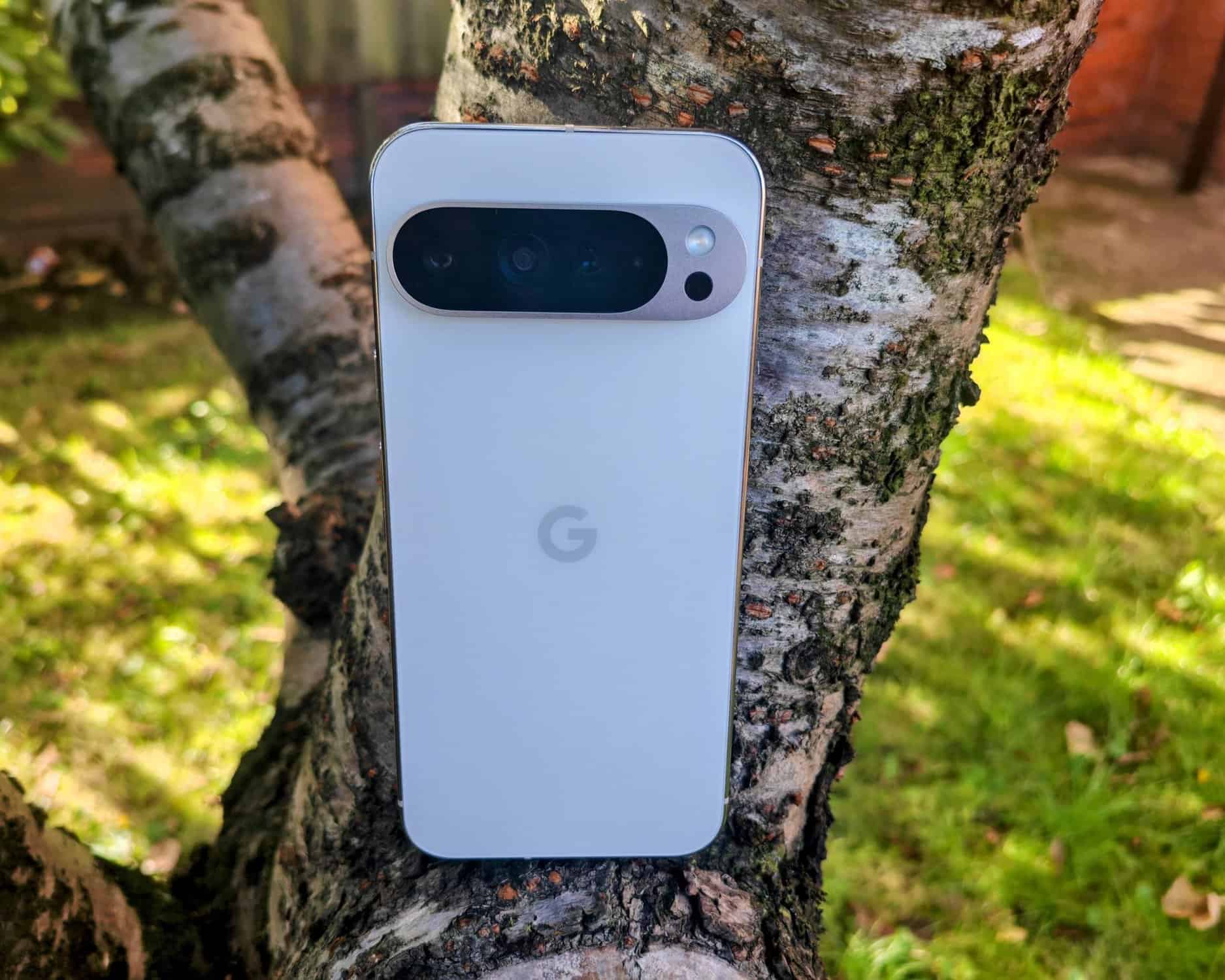
The Pixel 9 Pro XL marks a notable departure from the design language of previous Pixel models. Google has opted for a more premium and sophisticated aesthetic, featuring flat edges reminiscent of recent iPhone designs. This change not only refreshes the visual appeal but also contributes to improved durability.
The device boasts an aluminium frame with polished edges, complemented by a frosted glass back panel. I have mixed feelings towards the polished aluminium trim, it reminds me of many of the affordable Infinix phones I have reviewed. It is not awful, but there is something cheap-looking about it.
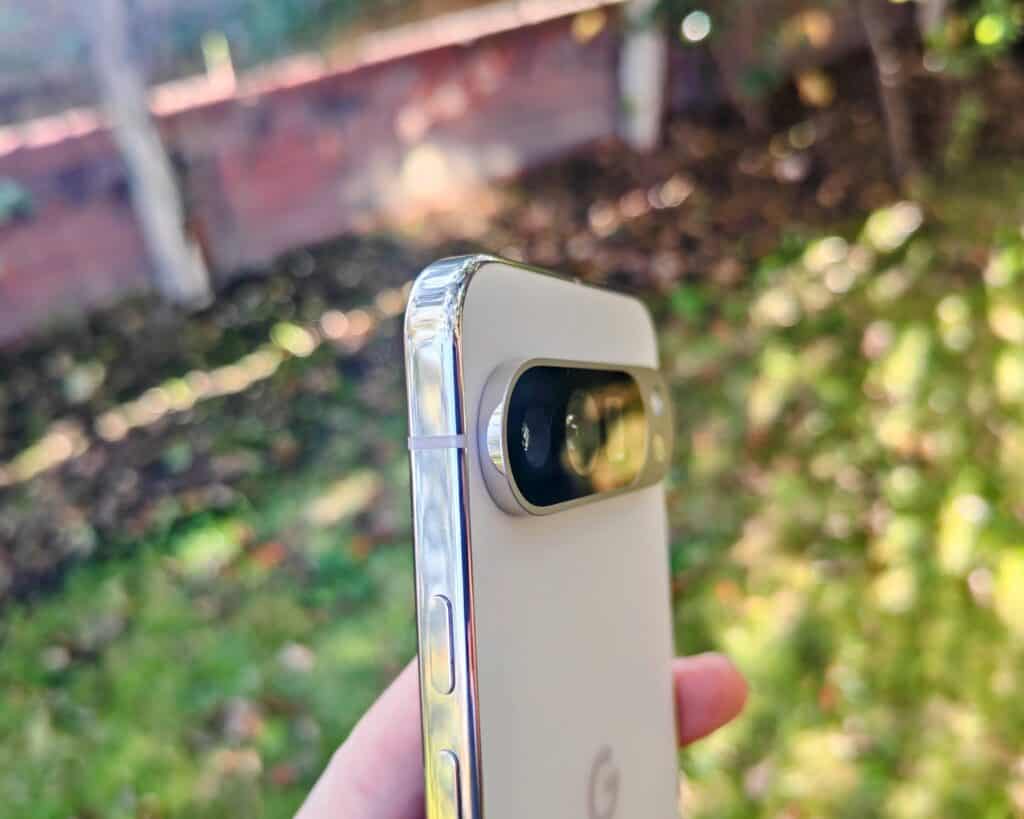
The camera bar, a signature element of recent Pixel phones, has been refined into a more subtle pill-shaped island that houses the triple-lens array.
Available in four colours – Obsidian, Porcelain, Hazel, and Rose Quartz – the Pixel 9 Pro XL offers a range of options to suit different tastes. The build quality feels robust, with Google claiming twice the durability of its predecessor. This improvement is likely due to the use of Corning Gorilla Glass Victus 2 on both the front and back, as well as the structural benefits of the flat-sided design.
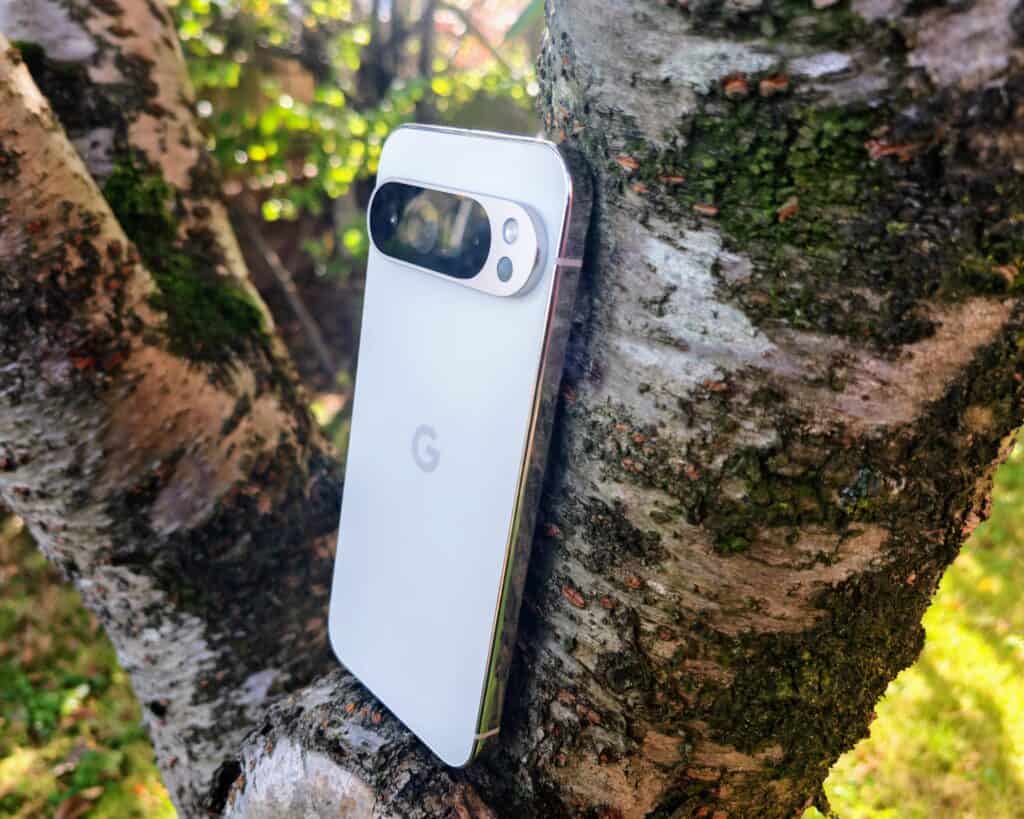
The phone maintains an IP68 rating for water and dust resistance, providing peace of mind for users concerned about accidental spills or exposure to the elements. However, the flat edges may feel less comfortable to hold for extended periods compared to the curved design of previous models.
Another minor criticism is the placement of the power and volume buttons on the right side of the device. While responsive, they may feel slightly stiff initially and could benefit from a more tactile feel.
Apart from my minor criticisms about the polished aluminium and buttons, the overall phone appearance and build quality are excellent and give off an understated elegance.
Display
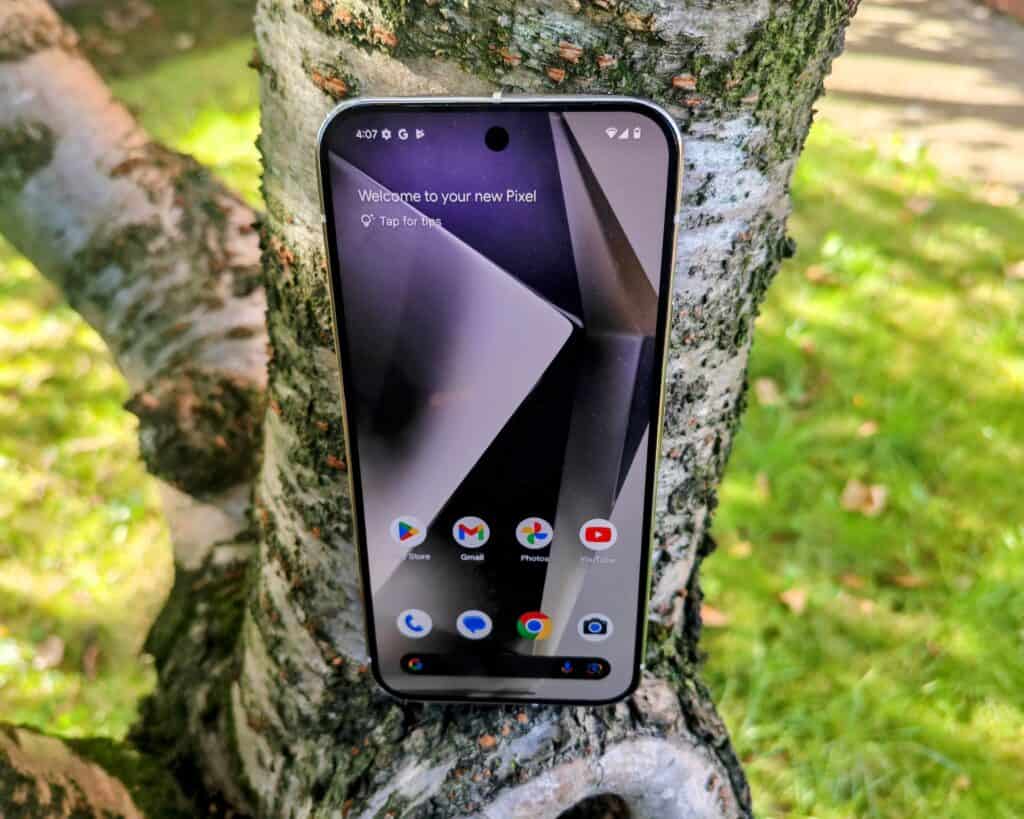
The Pixel 9 Pro XL features a 6.8-inch OLED display, a slight increase from the 6.7-inch screen of the Pixel 8 Pro. While this difference is minimal in practical terms, the quality improvements are more substantial.
The screen boasts a resolution of 1344 x 2992 pixels, resulting in crisp text and sharp images. The adaptive refresh rate, ranging from 1Hz to 120Hz, ensures smooth scrolling and animations while conserving battery life when displaying static content.
Perhaps the most significant upgrade is in brightness. The Pixel 9 Pro XL can reach a peak brightness of 3,000 nits, a considerable improvement over its predecessor’s 2,400 nits. This enhancement greatly benefits outdoor visibility, making the screen easily readable even in bright sunlight.
Colour accuracy and contrast are excellent, with the display supporting HDR10+ for enhanced dynamic range in compatible content. The panel also offers good viewing angles, maintaining colour consistency when viewed off-axis.
One potential drawback is the lack of a specialised anti-reflection coating, which some competitors like the Samsung Galaxy S24 Ultra offer. While the high brightness helps mitigate this issue, users in extremely bright environments may notice more reflections than on some rival devices.
Camera
The camera system has long been a standout feature of Pixel phones, and the Pixel 9 Pro XL continues this tradition with some notable improvements. The triple-lens rear camera array consists of:
- 50MP main camera (f/1.6 aperture) with a large 1/1.31″ sensor
- 48MP ultra-wide camera (f/1.8 aperture, 126-degree field of view)
- 48MP telephoto camera (f/2.8 aperture, 5x optical zoom) with a 1/2.55″ sensor
While the hardware specifications may seem similar to those of the previous generation, Google has made significant strides in image processing and computational photography.
The main camera produces excellent results in various lighting conditions. The colours are vibrant yet natural, and the level of detail captured is impressive. Dynamic range has been improved, with the phone handling high-contrast scenes more effectively than its predecessor.
The ultra-wide camera benefits from reduced distortion at the edges of the frame, a common issue with wide-angle lenses. This improvement results in more usable shots, particularly for architectural photography or group photos.
The telephoto lens maintains its 5x optical zoom capability but shows improvements in image quality at higher zoom levels. The Super Res Zoom feature, which combines optical and digital zoom techniques, can now produce usable images up to 30x magnification, although quality naturally degrades at extreme zoom levels.
Low-light performance remains a strength of the Pixel line, with the Night Sight mode capturing impressive amounts of detail in dark environments. The processing time for these shots has been reduced, making it easier to capture multiple night-time photos in quick succession.
Portrait mode has seen mixed results in this iteration. While edge detection has improved in some scenarios, there are instances where it struggles, particularly with complex hair or clothing textures. Users may find better results by using the telephoto lens and relying on natural depth of field for portrait-style shots.
Video capabilities have seen incremental improvements, with better stabilisation and more natural colour reproduction. However, some users may find that the Pixel 9 Pro XL still lags behind competitors like the iPhone in terms of overall video quality, particularly in challenging lighting conditions.
The front-facing camera, a 10.8MP sensor, produces good-quality selfies with accurate skin tones and pleasing bokeh effects in portrait mode. The wider field of view is particularly useful for group selfies or capturing more of the background in shots.
I sold my Pixel 8 Pro in favour of the Samsung Galaxy S24 Ultra, but moving back to a Pixel has reminded me how good the Pixel cameras are. They are both superb phones for photography, but the Pixel 9 Pro XL is superior and slightly better than the Honor as well.


Performance and Benchmarks
At the heart of the Pixel 9 Pro XL is Google’s latest Tensor G4 processor. This chip, designed in-house by Google, prioritises AI and machine learning capabilities over raw processing power.
While the chipset is good and more than capable of performing the vast majority of tasks, the Tensor chips have always failed to compete with Qualcomm and, to a lesser degree, MediaTek in terms of raw performance.
The Tensor G4 shows improvements in efficiency and thermal management compared to its predecessors. During testing, the phone remained cooler under load than previous Pixel models, suggesting better optimisation.
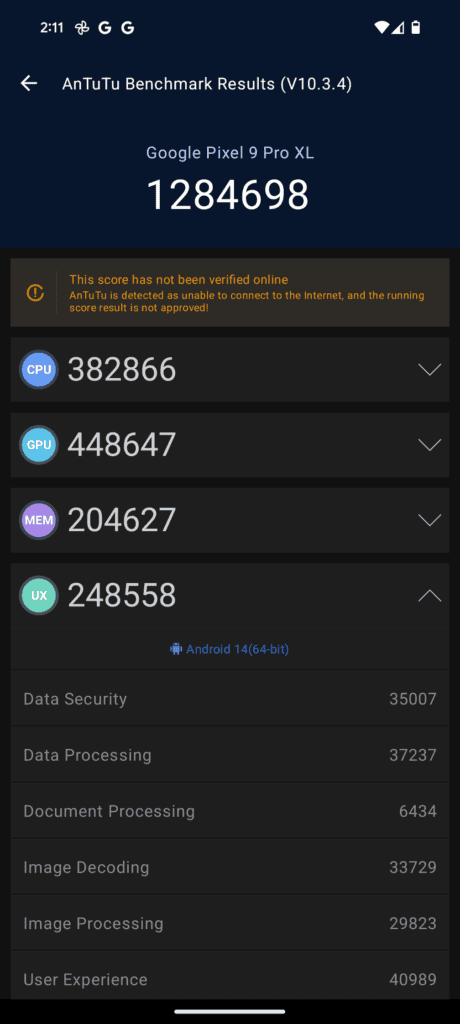
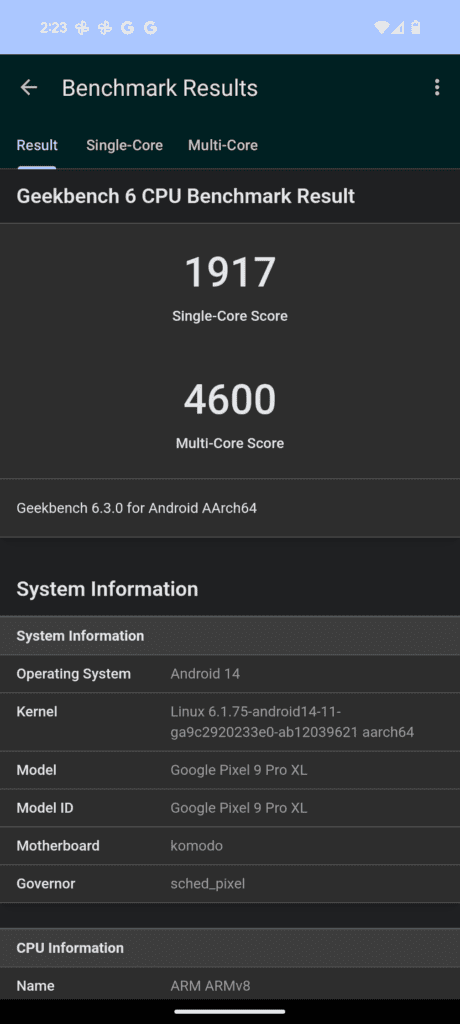
As for benchmarks:
- Antutu
- Pixel 9 Pro XL: 1,284,698
- Pixel 8 Pro: 1,144,447
- Samsung Galaxy S24 Ultra: 1,945,797
- Honor Magic6 Pro: 1,874,472
- GeekBench 6
- Pixel 9 Pro XL: 1917 / 4600
- Pixel 8 Pro: 1763 / 4409
- Samsung Galaxy S24 Ultra: 2103 / 6640
- Honor Magic6 Pro: 2220 / 6897
- 3Dmark WildLife Stress Test
- Pixel 9 Pro XL:
- Pixel 8 Pro: 8434 high, 5599 low, 66.4% stability
- Samsung Galaxy S24 Ultra: 17580 high, 9828 low, 55.9% stability
- Honor Magic6 Pro: 18,160 high, 11867 low, 65.4% stability,
- AI Benchmark
- Pixel 9 Pro XL:
- Pixel 8 Pro: 718
- Samsung Galaxy S24 Ultra: 3196
- Honor Magic6 Pro:
Google has significantly increased the RAM allocation for the Pixel 9 Pro XL, with configurations offering up to 16GB. This generous amount of memory ensures smooth multitasking and helps future-proof the device for increasingly demanding applications.
Storage options range from 128GB to 1TB, catering to users with varying needs.
The inclusion of an ultrasonic fingerprint sensor marks an improvement over the optical sensors used in previous Pixel phones. This technology offers faster and more reliable unlocking, especially in low-light conditions. Face Unlock remains an option and works well, even with glasses or in dimly lit environments.
Connectivity options are comprehensive, including 5G support, Wi-Fi 7, Bluetooth 5.3, and NFC. The Pixel 9 Pro XL also features improved cellular reception thanks to an upgraded modem, potentially benefiting users in areas with weaker signal strength.
Android 14
The Pixel 9 Pro XL runs on Android 14, with Google promising seven years of software updates and security patches. This long-term support is a significant advantage, ensuring the device remains secure and up-to-date for years to come.
Google’s version of Android remains clean and intuitive, with thoughtful features that enhance the user experience. The Material You design language allows for extensive personalisation, automatically theming the interface based on your chosen wallpaper.
AI capabilities are a major focus of the Pixel 9 Pro XL, powered by the Tensor G4 chip. Some notable AI features include:
- Enhanced speech recognition and real-time translation
- Improved photo editing tools, including Magic Eraser and Photo Unblur
- Smart Reply suggestions in messaging apps
- Adaptive Battery and Adaptive Charging for optimised battery life
While these AI features can be useful, their effectiveness varies. Some users may find certain AI-powered functions to be more gimmicky than practical in day-to-day use.
The integration of Google Assistant remains seamless, offering voice-activated controls and information retrieval.
Audio Quality
The Pixel 9 Pro XL features stereo speakers, with one located in the earpiece and another at the bottom of the device. Audio quality is generally good, with clear vocals and decent separation. However, bass response is somewhat limited, as is common with smartphone speakers.
Maximum volume is sufficient for personal use or sharing audio in small spaces, but it may struggle in noisier environments.
The phone supports Bluetooth 5.3 for wireless audio, with good codec support for high-quality streaming.
Battery Life
The Pixel 9 Pro XL is equipped with a 5,050mAh battery, which provides ample power for a full day of heavy use. Under normal usage patterns, many users will find the phone can last for a second day before requiring a charge.
Google has made strides in optimising power consumption, with the adaptive refresh rate display and efficient Tensor G4 chip contributing to improved battery life compared to previous models.
Charging options include:
- 30W wired fast charging (charger not included in the box)
- 23W wireless charging with compatible Pixel Stand
- Reverse wireless charging for accessories
While the 30W wired charging is reasonably fast, it falls short of the rapid charging speeds offered by some competitors. A full charge from 0% takes approximately 1 hour and 15 minutes.
The decision to omit a charger from the box may frustrate some users, although it aligns with industry trends towards reducing electronic waste.
Price and Alternative Options
No products found.
The Pixel 9 Pro XL starts at £1,099 for the base 128GB model, with prices increasing for higher storage capacities. This positioning places it in direct competition with other premium flagships like the Samsung Galaxy S24 Ultra.
The Samsung Galaxy S24 Ultra starts at £1249 but regularly has discounts knocking £100-£200 off. At the time of writing, you could get £100 off plus a free Chromebook Go and a screen protector.
The Honor Magic6 Pro is not cheap but more affordable than the other two. It has an RRP of £900 and at the time of writing was available for just £729.
While the price of the Pixel 9 Pro XL is considerable, it offers a compelling package for those invested in the Google ecosystem or who prioritise camera quality and software experience. The promise of seven years of updates adds long-term value, potentially offsetting the initial cost for users who plan to keep their devices for several years.
However, the pricing may be a sticking point for some consumers, especially considering that previous Pixel models were often positioned as more affordable alternatives to other flagship devices.
Overall
The Pixel 9 Pro XL follows the trend of most flagship smartphones nowadays. It is an incremental improvement from the previous generation.
In terms of the hardware, you have a slightly better display, superior selfie camera, faster WiFi and slightly faster charging. That’s it.
In reality, the improvements are more significant than the specification states. The camera performance has improved, and Google continues to be the best brand in the game for photography.
Like every other brand in 2024, Google is pushing AI heavily with the Pixel 9 series and even includes years of Gemini and 2TB of storage free of charge. It is a nice perk if you already use it, but I find these things are often a bit of a scam to get you to subscribe after a year. If Google had offered 2 or 3 years of free Gemini, which correlates with many people’s upgrade cycles, then I would have thought it was a superb offer.
The AI features are nice, but many of these are available on other phones and within Google apps like Photos, regardless of the phone you have.
While the focus on AI is commendable, the practical benefits of some features may vary depending on individual use cases. The camera system remains a standout feature, although some inconsistencies in areas like portrait mode suggest there’s still room for improvement.
The decision to increase the price puts the Pixel 9 Pro XL in direct competition with established premium flagships. While it holds its own in many respects, potential buyers will need to weigh the unique strengths of the Pixel experience against the offerings of competitors.
For users deeply integrated into the Google ecosystem, photography enthusiasts, or those who value clean software and long-term support, the Pixel 9 Pro XL, like previous Pixel phones, is outstanding. However, the higher price point and some lingering shortcomings in areas like video quality may give pause to those considering a switch from other high-end devices.
Overall, it is not the most exciting phone, but it is more refined than the previous models, and it holds its own against other flagship phones like the Samsung Galaxy S24 Ultra.
Pixel 9 Pro XL Review
-
Overall - 85%
85%
Summary
While the Pixel 9 Pro XL doesn’t significantly improve over its predecessor, it is a more refined device with a superior display, improved image processing for photography, and heavily integrated AI features. It continues the tradition of the Pixel being one of the best Android flagship phones on the market.
Pros
- Excellent camera system with improved processing
- Bright, high-quality display
- lean, intuitive software with long-term update support
- Powerful AI capabilities
Cons
- Higher price point compared to previous Pixel models
- Some AI features may feel gimmicky
- Video quality, while improved, still lags behind some competitors